Fuel & Fields · Ayutthaya, Central Thailand
The Pumps He Cannot Run
In Ayutthaya, a rice farmer kept rewriting the day’s pumping plan after the station ran dry — trying to save a crop already in the ground.
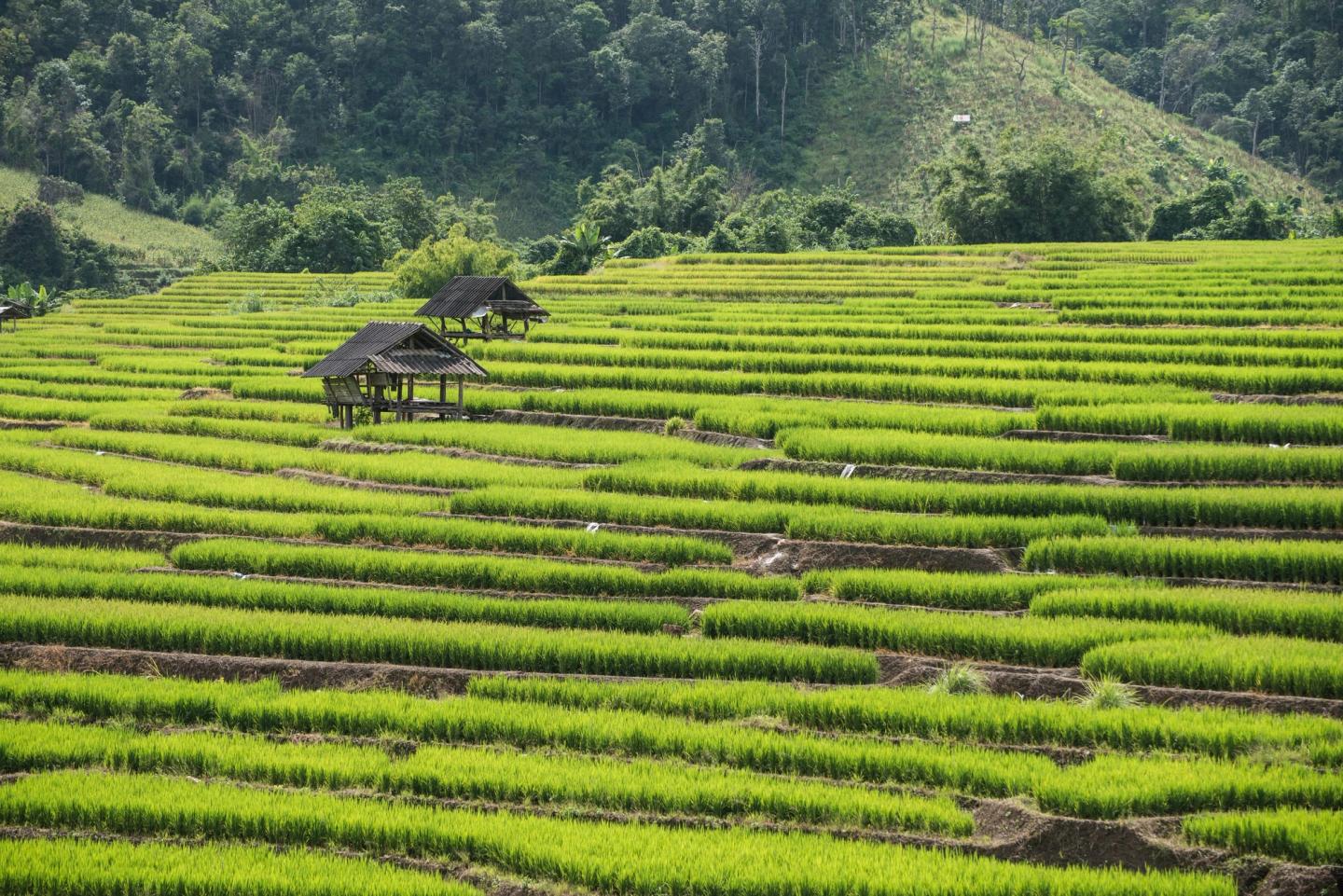
Illustrative / schematic only — terraced rice fields in Chiang Mai (Pexels / Pitipat Usanakornkul). NOT a photograph of Thanadet Traiyot; NOT his Ayutthaya farm; not from The Guardian. Used to suggest irrigated rice landscape, not the subject’s fields.
The cans he carries
AYUTTHAYA, THAILAND · MARCH 2026
Thanadet Traiyot carries fuel containers whenever he leaves home. Even an ordinary trip might offer a chance to find diesel — and he cannot afford to miss it.
Five days before a Guardian reporter met him in March 2026, he had waited for hours at a gas station. He was third in line when the diesel ran out.
Back on his rice farm, he had to divide the remaining fuel among the pumps watering his fields. His rice needed water. His pumps needed diesel. The fuel was dearer and harder to find.
These scenes were reported by Rebecca Ratcliffe for The Guardian from Ayutthaya in March 2026. This Field Note is a secondary account of that reporting — not an original interview.
Which pumps to shut
He waded among the stalks to read the water levels. Water had to be spread evenly, he said, but there was not enough diesel for every pump. The day became a sequence of adjustments: which pump could stop, which plot could wait. The crop was already planted; the plan kept changing so it might still live.
Why the fuel ran short
Thai diesel had risen to 38.94 baht per litre from 29.94 before the war after subsidies were cut, according to the Guardian reporting. Queues and “out of stock” signs still appeared at many stations.
Separately, The Straits Times (26 March 2026) reported that Thailand’s Oil Fuel Fund, strained by surging global crude costs after the war in Iran, scaled back fuel subsidies. A 25 March announcement set a six-baht-per-litre rise for the next morning; diesel jumped about 18 percent under fiscal pressure on the fund.
What he would not leave
Harvest would need even more fuel. With off-season rice already in the ground, walking away was not clean. Thanadet conserved what diesel he had and took jerry cans whenever he left home.
We can’t leave the crops to rot and die in the field.
The crop is a commitment; the fuel is intermittent. Persistence looks like rewriting the pumping schedule — and carrying empty cans on every errand.
What remains open
Thanadet was still rationing fuel in March 2026. In the same Guardian piece, nearby farmer Pairote Rodpai said his family could manage for now, but worried others without savings might stop planting. Pramote Charoensilp, of the Thai Agriculturist Association, warned fertiliser tied to Middle East supply could be the next pressure within a month — their views, not Thanadet’s.
The reporting shows how he was managing then. It does not say whether the stations restocked in time for harvest, or what the season yielded.
Sources & Reading
Rebecca Ratcliffe, “In Thailand’s rice paddies, rising petrol prices spell chaos for farmers,” The Guardian, 27 March 2026. — Primary reporting: Thanadet Traiyot; also Pairote Rodpai and Pramote Charoensilp.
“Fuel prices jump up to 22% in Thailand after subsidies slashed,” The Straits Times, 26 March 2026 (Bloomberg). — Independent background: Oil Fuel Fund subsidy cut; six-baht rise; diesel ~18%.
Related Forces
Related Places