River & Catch · Cairo, Greater Cairo / Giza Nile islands
The Catch He Hauls Instead
On a Cairo Nile island, a fisherman whose winter catch collapsed now earns more gathering plastic than fish — and rebuilt family life from that trade.
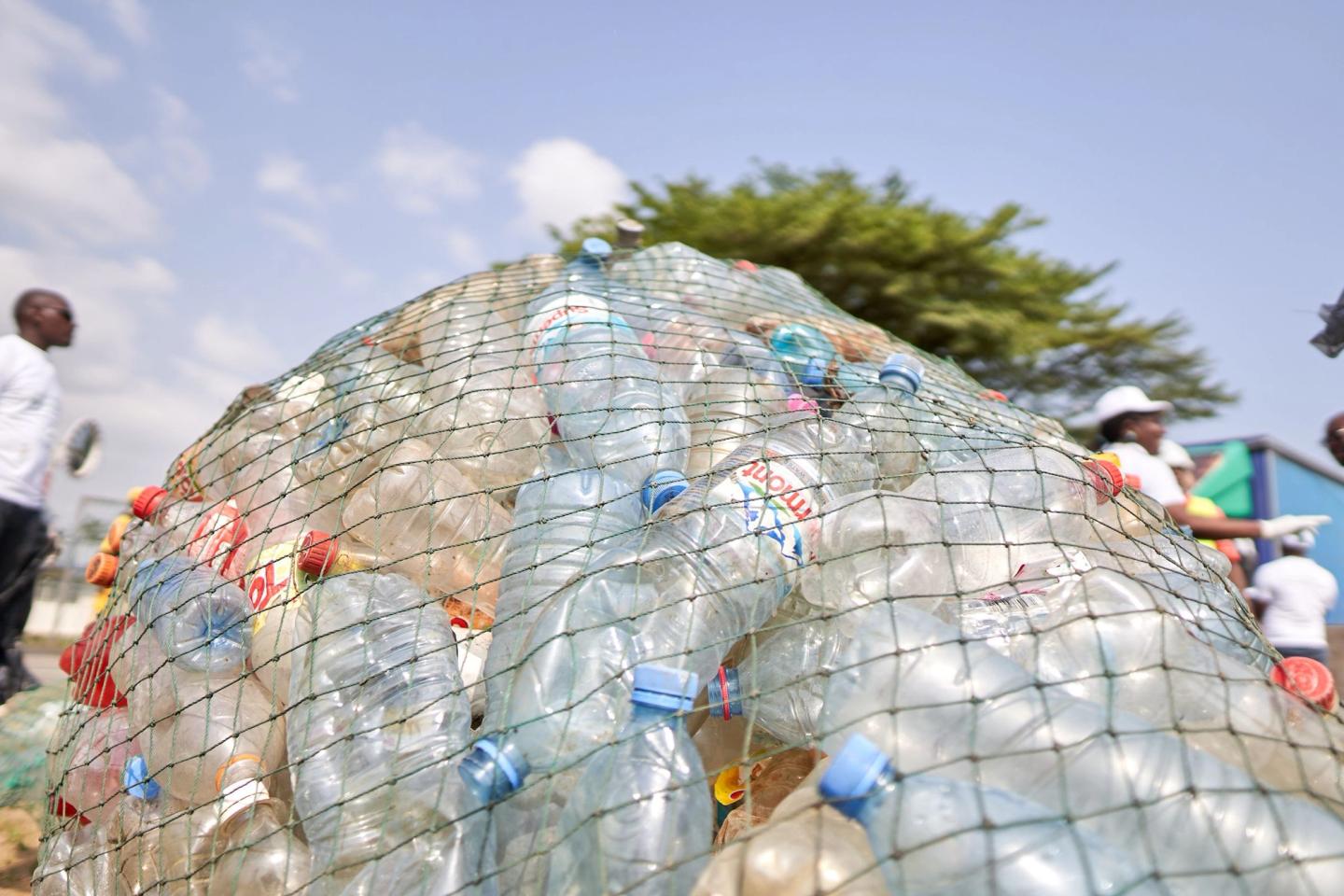
Illustrative / schematic only — fishing net with plastic bottles (Pexels / Xavier Messina). NOT a photograph of Mohammed Ahmed Sayed Mohammed; NOT his al-Qarsaya boat; not from The Guardian. Used to suggest plastic haul as catch, not the subject’s gear.
Six in the morning
AL-QARSAYA ISLAND, CAIRO · MARCH 2026
At six in the morning, Mohammed Ahmed Sayed Mohammed steers his boat from al-Qarsaya island into the Nile toward the riverside clubs. Fifteen years earlier, the same route meant fish. In March 2026, he was hunting plastic bottles.
He is sixty. He left Assiut as a fourteen-year-old fishing apprentice, stayed on the Giza island, married, and raised three children who now live beside him with twelve grandchildren among roughly two hundred families. He never returned to his village. The boat and the river stayed; the catch changed.
These details were reported by Hanaa Hamad for The Guardian from Cairo in March 2026. This Field Note is a secondary editorial account of that reporting — not an original interview.
What winter used to yield
Winter fishing once brought him about twenty-five kilograms of fish a day. By the time of the reporting, he was catching four to five kilograms, sold at seventy Egyptian pounds a kilogram. Plastic paid differently: thirty-three pounds a kilogram — up from eight when the Very Nile initiative began in 2018 — and tin cans eighty-five. In summer’s low season he collected about twenty kilograms of plastic a day; winter peaks brought two to three thousand pounds a month from plastic alone.
About one hundred eighty fishers on al-Qarsaya had shifted toward waste collection as fish declined. Very Nile, launched by the Egyptian social enterprise Bassita, buys plastic above ordinary recycling-plant rates. Separately, Al-Ahram Weekly and CairoScene described the same island base and a network that had grown from a handful of fishers to around two hundred across Cairo and Assiut.
The fish fled from the plastic chokehold.
What the new catch paid for
Sayed said plastic collection income married off his three children and paid for a cafe he built on the island for his eldest son, Mohammed, because the sons found no other work. The skill that once filled a net with fish now filled it with bottles — same river, same early boat, different haul.
Al-Qarsaya sits in central Cairo yet is reached only by ferry or fishers’ boats. The island lacks adequate healthcare; Sayed’s wife died there three years before the reporting. His children did not finish school. Those facts sit beside the income story, not as invented private scenes.
What remains open
In March 2026 Sayed was still collecting plastic and still catching a little fish. Very Nile had gathered more than four hundred fifty-four tonnes of Nile plastic since 2018 and was expanding upriver. The reporting shows how he was making a living then. It does not say whether fish returned to his stretch of water, or how long plastic alone can hold a household on the island.
Sources & Reading
Hanaa Hamad, “‘The fish fled’: Nile fisherman earning more from collecting plastic than fish,” The Guardian, 15 March 2026. — Primary reporting: Mohammed Ahmed Sayed Mohammed; al-Qarsaya fishers; Very Nile / Bassita.
“Refunctioning waste from the Nile,” Al-Ahram Weekly / Ahram Online (Living). — Independent background: Very Nile headquarters on Al-Qursaya; growth from a few fishers to ~200 in Cairo and Assiut.
“From Plastic to Purpose: VeryNile’s Rippling Impact is Expanding,” CairoScene / StartupScene. — Independent background: island drop-off model; planned Upper Egypt expansion.
Related Forces
Related Places