Shore & Soil · La Vallée de Ferney, southeast coast / Grand Port
The Greens She Carries Home
After the Wakashio oil spill wrecked the southeast Mauritius fishery, Sandy Monrose secured a tired acre the day she asked — and rebuilt household food from organic surplus with a women’s collective.
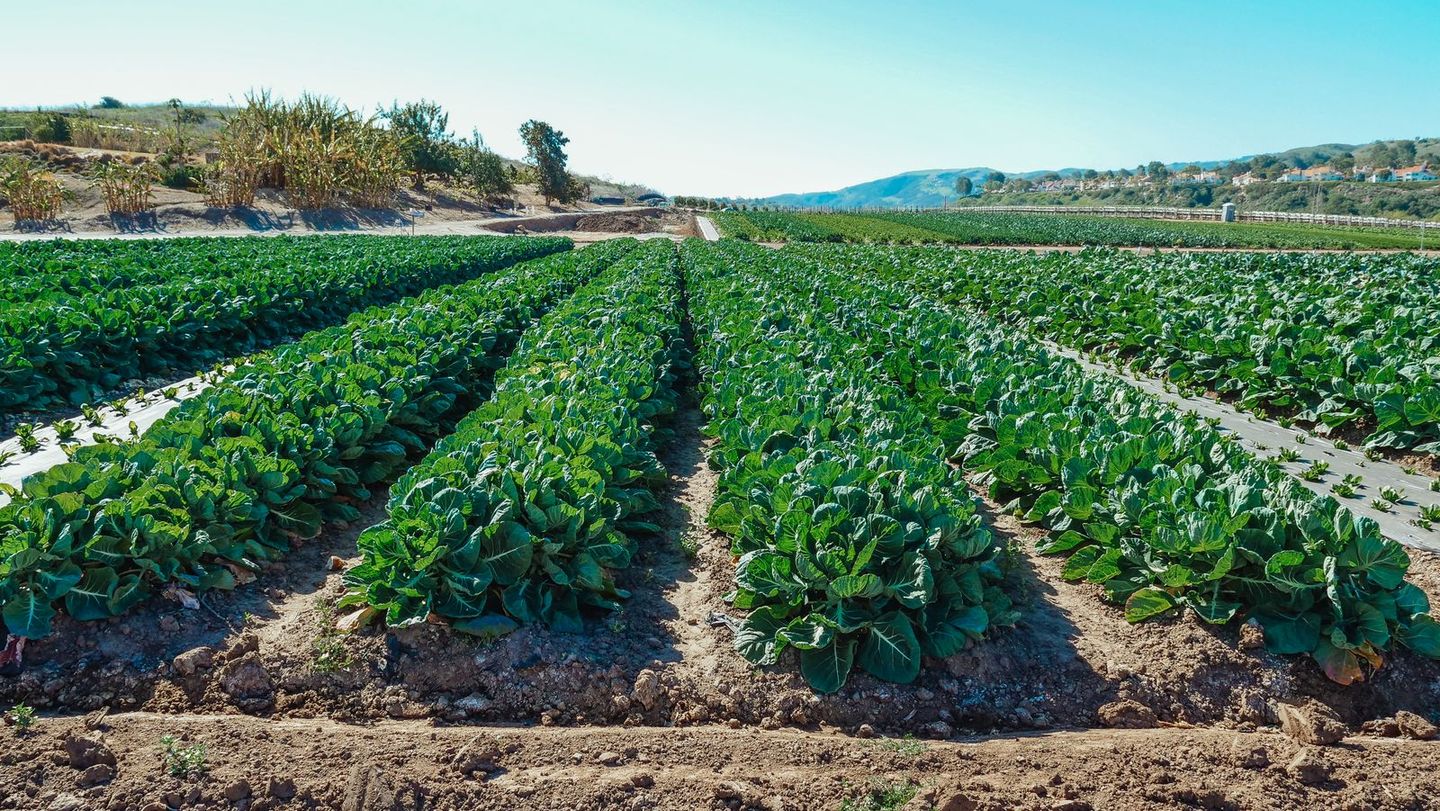
Illustrative / schematic only — leafy vegetable rows (Pexels / Kindel Media). NOT a photograph of Sandy Monrose; NOT her La Vallée de Ferney farm; not from The Guardian. Used to suggest greens carried home, not the subject’s plot.
The day she asked
LA VALLÉE DE FERNEY, SOUTHEAST MAURITIUS · AUGUST 2025
Sandy Monrose never planned to farm. Generations of fishers raised her on the southeast tip of Mauritius; the Indian Ocean was the family ground. Pre-Wakashio she odd-jobbed as a seamstress and cleaner while her skipper husband found work day to day, with “no security.” When the lagoon economy failed after the oil spill, she asked Ferney Ltd for land — and got it the same day.
These details were reported by Lorraine Mallinder for The Guardian from Mauritius on 26 August 2025. This Field Note is a secondary editorial account of that reporting — not an original interview.
What the wreck took
On 25 July 2020 the Japanese-owned MV Wakashio ran aground off Pointe d’Esny. Monrose, then living in the fishing village of Cité la Chaux, remembered the “creaking and groaning” of the vessel in high winds. Twelve days later the hull fractured; about 1,000 tonnes of fuel oil entered the waters — a figure corroborated in OCHA flash updates and IMO briefings. Dolphins washed ashore. Livelihoods already thinned by the first 2020 Covid lockdown collapsed for fishers, skippers, boat builders and tourism workers.
As people of the sea, Monrose became a fixture on the Mahébourg waterfront. Drawing on childhood memory of sewing her father’s nets, she helped volunteers fill net booms with sugar-cane leaves and hair to contain the slick. Her cousins put fishing boats to work casting them.
What she planted instead
Months later, while delivering food packages with the NGO Eco-Sud, she made an appointment with Ferney Ltd — part of Ciel Group — which runs an agri-hub for farming entrepreneurs in La Vallée de Ferney nature reserve.
We asked for land and we got it on the same day.
By 2021 women were working the plot. Floods and overturned beehives pushed them onto higher slopes; Ferney arranged training in agroecology, permaculture and beekeeping. The South-East Ladies Agro collective — a team of ten by the August 2025 reporting — grew a tonne of organic fruit and vegetables that year, feeding households and selling surplus. Companions named in the same reporting include Florisse Latouche of Bambous Virieux, whose husband lost a second fisher job, and Marie Claire Robinson of Cité la Chaux, who left social-work work under pressure that included caring for a son with cerebral palsy.
Same southeast coast, different ground: a sea-people woman rebuilt household food security as farm surplus when the lagoon that had fed the coast failed.
What remains open
Mallinder’s August 2025 reporting shows the harvest and the collective at work. It does not say whether lagoon fishing has recovered enough to replace the farm, or how long one revitalised acre can hold ten households on the southeast coast.
Sources & Reading
Lorraine Mallinder, “Bringing home the bok choi: how an oil spill in Mauritius led to a female revolution in farming,” The Guardian, 26 August 2025. — Primary reporting: Sandy Monrose; South-East Ladies Agro; Ferney Ltd / La Vallée de Ferney; companions Florisse Latouche and Marie Claire Robinson.
OCHA, “Mauritius: MW Wakashio Oil Spill Flash Update No. 2 (11 August 2020).” — Independent corroboration of grounding date and fuel-oil release scale for spill facts only.
Related Forces
Related Places