Panipat, Haryana
The Work She Cannot Afford to Leave
In India's textile-recycling industry, a mother of two faces a choice between the wages her family needs and the dust that makes her sick.
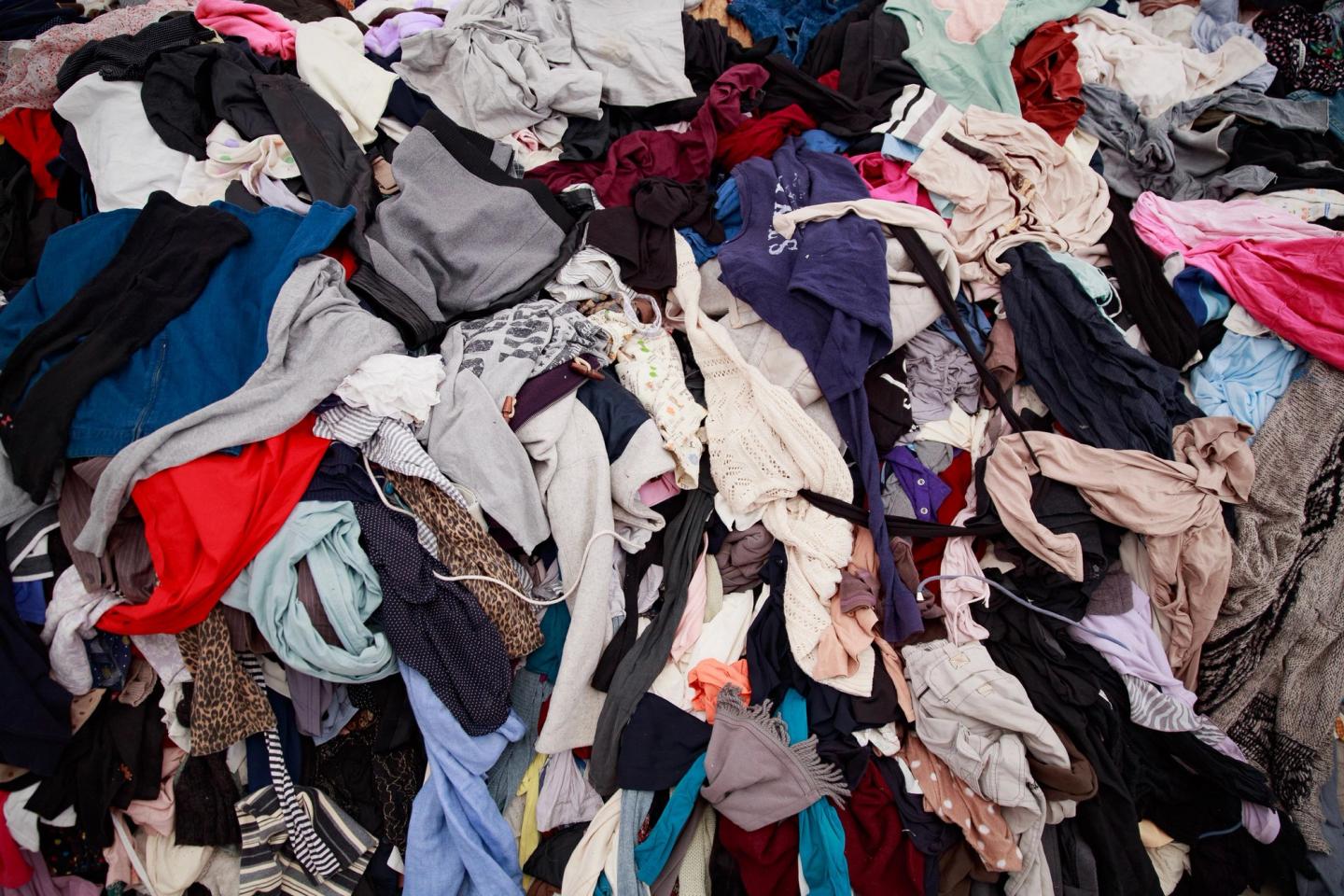
Illustrative / schematic only — discarded-clothing pile (Pexels / NEOSiAM). NOT a photograph of Neerma Devi; NOT her factory floor; not from The Guardian or The Quint. Used to suggest textile-recycling feedstock.
A household in one industry
At the time of the 2025 reporting, Neerma Devi was 27. In Panipat, the same industry had already shaped three generations of her family. Her father-in-law had spent years in textile mills and was living with advanced COPD. Her husband, Kailash Kumar, still worked at the same mill where his father had worked. Neerma continued to handle discarded clothing despite chest and breathing problems. Her sons, three and five, were often at the factory with her; there was no childcare on the floor.
These details, reported by Anuj Behal in The Guardian in October 2025, point past one worker’s illness to a household whose livelihood and health risks run through the same trade. The question is not only why Neerma stays, but how free a person is to leave when the work that may damage her health also supports her family.
The bay
The work is textile recycling: opening discarded clothes shipped in from Europe, North America, and east Asia, then feeding them toward shredding. Dust and lint hang in the air of the factory bay. Neerma worked six days a week. The boys were often there because the floor offered no childcare — a condition of the shift, not a dramatized scene.
How the road bent here
Nearly six years earlier she had left Hardoi with her husband for mill work in Panipat. Her father-in-law had been the first in the family to come, almost twenty years before. Kailash still worked at the mill where his father had worked; doctors had warned him, too. The father-in-law’s advanced lung disease sat in the household as a known fact of long exposure — continuity, not coincidence.
What the doctor said
By the end of a shift her chest tightened. Skin itched. Breathing could turn difficult. A doctor linked the problems to the dust and told her to leave the work.
But I can’t afford to.
That one sentence holds the bind. The medical advice is clear; acting on it would cut the wage that keeps the household going. Freedom and livelihood pull in opposite directions — and in the reported facts, livelihood wins.
What remains open
At the time of the reporting, Neerma had been advised to leave the work. Her husband was still employed at the mill where his father had worked. Her father-in-law was living with advanced lung disease. And her two young sons often accompanied her to the factory.
Three generations of one family had become connected to Panipat’s textile industry in different ways: through employment, illness, and the ordinary circumstances of childhood.
The reporting tells us why leaving was difficult for Neerma in 2025. It does not tell us whether she or her family have since found another way to make a living.
Sources & Reading
Anuj Behal, “Fast-fashion recycling: how ‘the castoff capital of the world’ is making Indian factory workers sick,” The Guardian, 7 October 2025. — Primary source for Neerma Devi / family / workplace conditions. Fair-use short quote only.
Related Places