Status & Silence · Springfield, Ohio / Clark County
The Days She Spent in Silence
In Springfield, Ohio, Haitian immigrant Michaelle Louis — who fled Port-au-Prince after her brother’s murder — spent five days in a darkened basement when ICE arrived after temporary protected status ended; weeks later she was 23 miles into a 45-mile march to the statehouse.
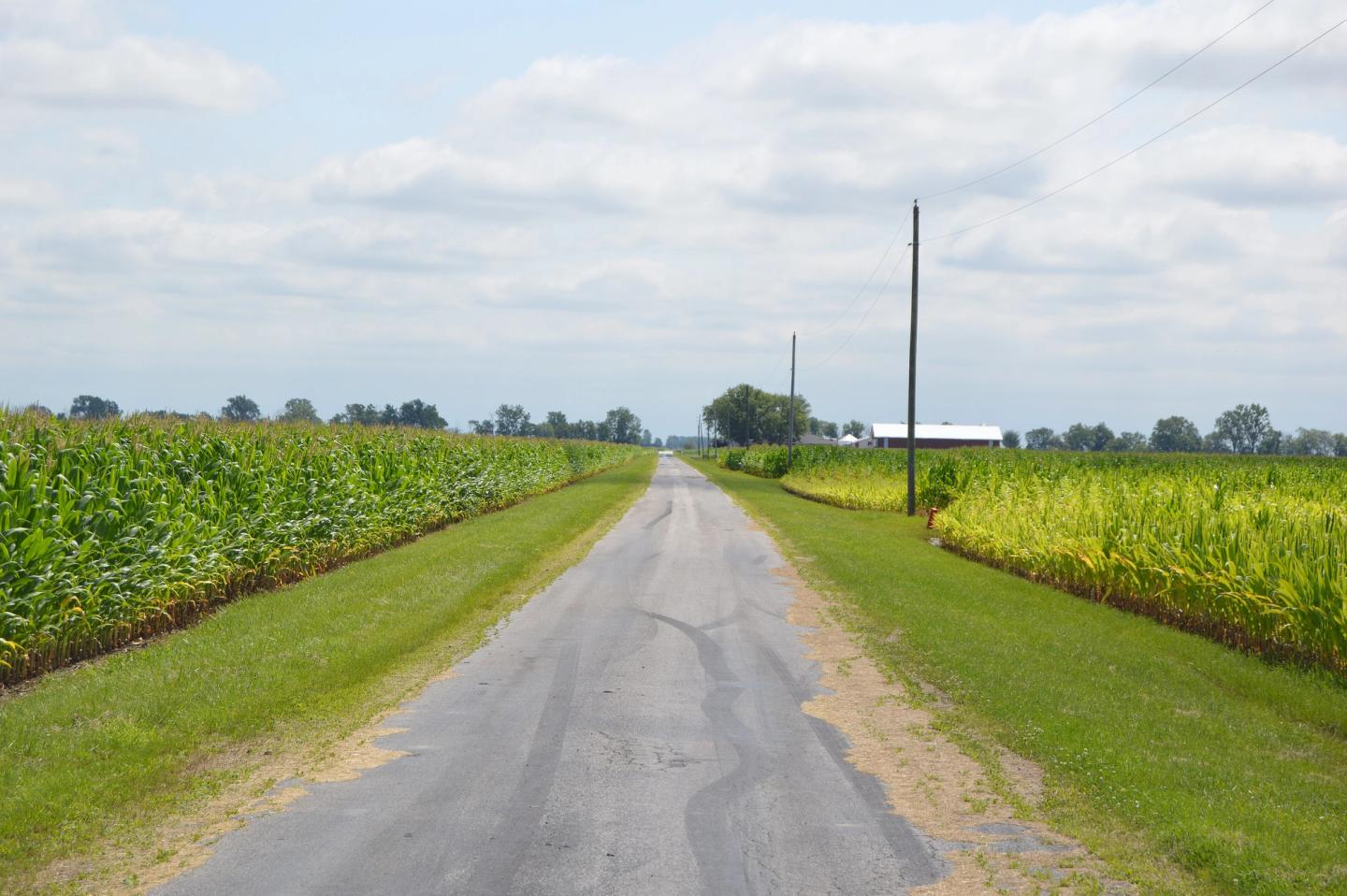
Illustrative / schematic only — cornfields along Dunn Road in Wood County, Ohio (Wikimedia Commons / Nyttend). NOT a photograph of Michaelle Louis; NOT the Springfield–Columbus march; not from The Guardian. Used to suggest the cornfield landscape reported along the march corridor, not the subject’s location.
What the curtains held
SPRINGFIELD, OHIO, UNITED STATES · NOVEMBER 2026
Michaelle Louis’s feet and legs ached. Twenty-three miles into a forty-five-mile march from Springfield to Ohio’s statehouse in Columbus, she could barely walk. Cornfields lined the route; a highway hummed in the distance. She was one of dozens of activists demanding better rights for Haitian immigrants.
These details were reported by Stephen Starr for The Guardian from Springfield on 1 November 2026. This Field Note is a secondary editorial account of that reporting — not an original interview.
Five days without daylight power
Louis grew up in Port-au-Prince. In December 2018 a gang murdered her thirty-one-year-old brother. She left Haiti three months later under gang threats and entered the United States legally through the southern border, arriving in Springfield in 2021. Haitians had begun filling blue-collar openings in the struggling town of about sixty thousand some eight years earlier.
In July 2026 a Supreme Court ruling allowed the Trump administration to end temporary protected status for more than 350,000 Haitian nationals. Within days, ICE agents descended on Springfield. In September, homeland security secretary Markwayne Mullin said 380 people had been detained there. In August, Louis spent five days huddling with her daughter and brother in the basement of her Springfield home. The family went without electricity during daylight hours so officers would not know anyone was inside.
We spent our days in silence.
What the march asks
“I closed the curtains. I didn’t want anyone to know there was people living in our house,” she told Starr. The three-day march she joined asked authorities to end ICE detention and ankle monitors, to remove agents from Springfield, and to open a permanent residency pathway for Haitians who have worked and contributed in the United States. On day two, as an Amazon warehouse that once employed dozens of Haitians came into view, she spoke of a Haitian woman whose husband had been deported: the couple had bought a house; now the family was preparing to follow him back to Haiti.
Louis said a false campaign claim in September 2024 — that Springfield immigrants ate pets — shook her more than anything else. Until then she had gone to work and come home, helping Americans facing domestic violence. “I was sleeping and now I woke up for my community,” she said.
What remains open
Starr’s November 2026 reporting settles the basement days, the detention count cited by Mullin, and the march’s demands. It does not settle whether agents leave Springfield, whether a residency pathway opens, or who keeps a household standing when the person who signed the mortgage is removed first.
Sources & Reading
Stephen Starr, “‘We spend our days in silence’: fear and repression in Ohio as ICE terrorizes Haitian immigrants,” The Guardian, 1 November 2026. — Primary reporting: Michaelle Louis (Port-au-Prince → Springfield 2021); brother murdered Dec 2018; five basement days Aug 2026; TPS end July 2026; 380 detentions cited by Mullin; 45-mile march demands; Amazon warehouse; pet-eating claim impact.
Related Forces
Related Places