Spray & Care · Timau, Meru / Mount Kenya slopes
The Medications She Cannot Buy
In Timau, Kenya, former greenhouse picker Margaret Mwanjaro cares round-the-clock for her son Reuben Muriki — a former flower-farm sprayer who at 30 cannot walk alone — while for five days she lacked money for his neurological meds; both are among 87 seeking to join a pesticide petition.
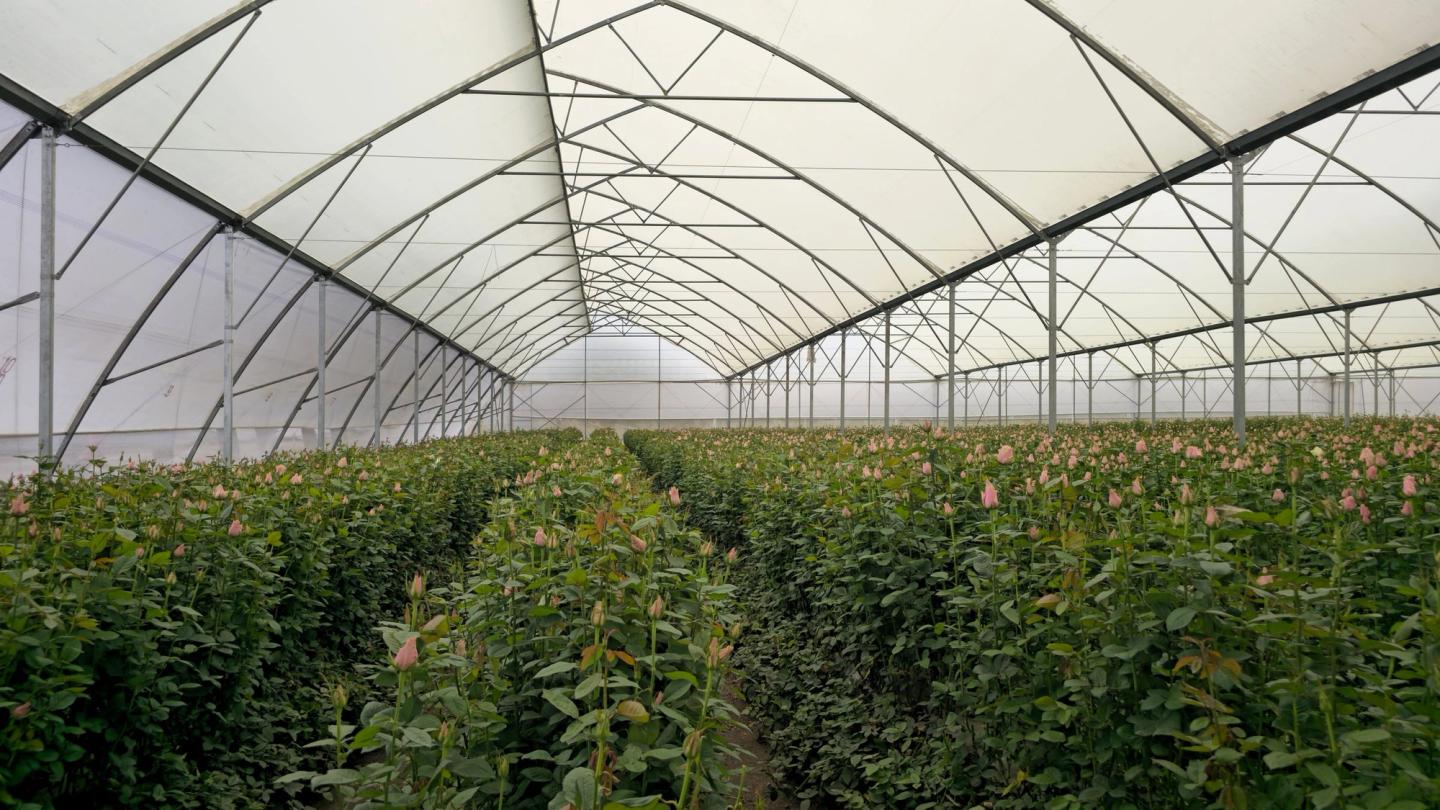
Illustrative / schematic only — roses in a commercial greenhouse (Pexels / Rajeeb roy). NOT a photograph of Margaret Mwanjaro or Reuben Muriki; NOT Mukuri village; not from The Guardian. Used to suggest export horticulture greenhouses, not the subjects’ workplaces.
What the fumes left
TIMAU, MERU COUNTY, KENYA · NOVEMBER 2026
Margaret Mwanjaro worked five years in Timau greenhouses — weeding and picking roses and other flowers — until 2017. She started early, she told a reporter, without personal protective equipment, only hours after sprayers had applied chemicals. “You’d feel the fumes getting into your throat,” she said. Four years in, blisters and growing weakness pushed her to quit. She still has worn nails, inflamed skin, and a constant cough.
These details were reported by Carlos Mureithi for The Guardian from Timau on 3 November 2026. This Field Note is a secondary editorial account of that reporting — not an original interview.
A sprayer who cannot walk alone
Her son, Reuben Muriki, once sprayed pesticides on a flower farm near the same horticultural town. Several years ago he fainted doing a chore at home in Mukuri village. Joints swelled; skin discoloured; breathing grew hard. Doctors treated him for suspected tuberculosis without success. He quit the sprayer job. Now 30, he cannot walk on his own. He speaks incoherently and forgets things quickly. Mwanjaro provides the round-the-clock care he needs.
Scientists hired by petitioners tested urine from 87 people seeking to join a court case. In Muriki’s sample they found nearly 200 times the reference limit for paraquat and 48 times for glyphosate. Pathologist Prof Zakayo Thaimuta said they found no other cause for his conditions except those levels.
I can’t do much work… I can’t stand the pain.
Lifeline and petition
Timau, a town of about 10,000 on the Mount Kenya slopes in Meru County, has for decades hosted horticultural companies that employ thousands and ship mainly for export — an economic lifeline for generations. Muriki is one of 87 people seeking to join a 2022 court petition against the Kenyan government and five agrochemical companies over the sale of highly hazardous pesticides. The court is expected to decide early next year whether to enjoin them as a class action.
Bayer and Syngenta told The Guardian their products are safe when used to label instructions; Kenya’s Pest Control Products Board declined comment because the matter is in court. BASF and Twiga Chemical Industries did not respond. Mwanjaro pointed to an empty pack of neurological medications on a table: for five days she had lacked money to buy them for him.
What remains open
Mureithi’s November 2026 reporting settles the urine findings, the petition timeline, and the empty medicine pack. It does not settle whether the court will certify the class, who pays for care while the case waits, or how a town that lives off export flowers will protect the workers who stay to care for one another.
Sources & Reading
Carlos Mureithi, “Farm workers are falling sick in a Kenyan horticultural town. Were they poisoned by pesticides?” The Guardian, 3 November 2026. — Primary reporting: Margaret Mwanjaro and Reuben Muriki (Mukuri village, Timau); greenhouse and sprayer work histories; urine paraquat/glyphosate levels; 87 petitioners; horticulture as Timau lifeline; company responses.
Related Forces
Related Places