Nurdle & Net · Negombo, Western Province / Negombo lagoon & Pamunugama coast
The Lagoon He Still Farms
Five years after the X-Press Pearl nurdle spill, Negombo lagoon fish farmer Jude Anthony says pollution still keeps him from fishing properly — while a billion-dollar court order remains largely unpaid.
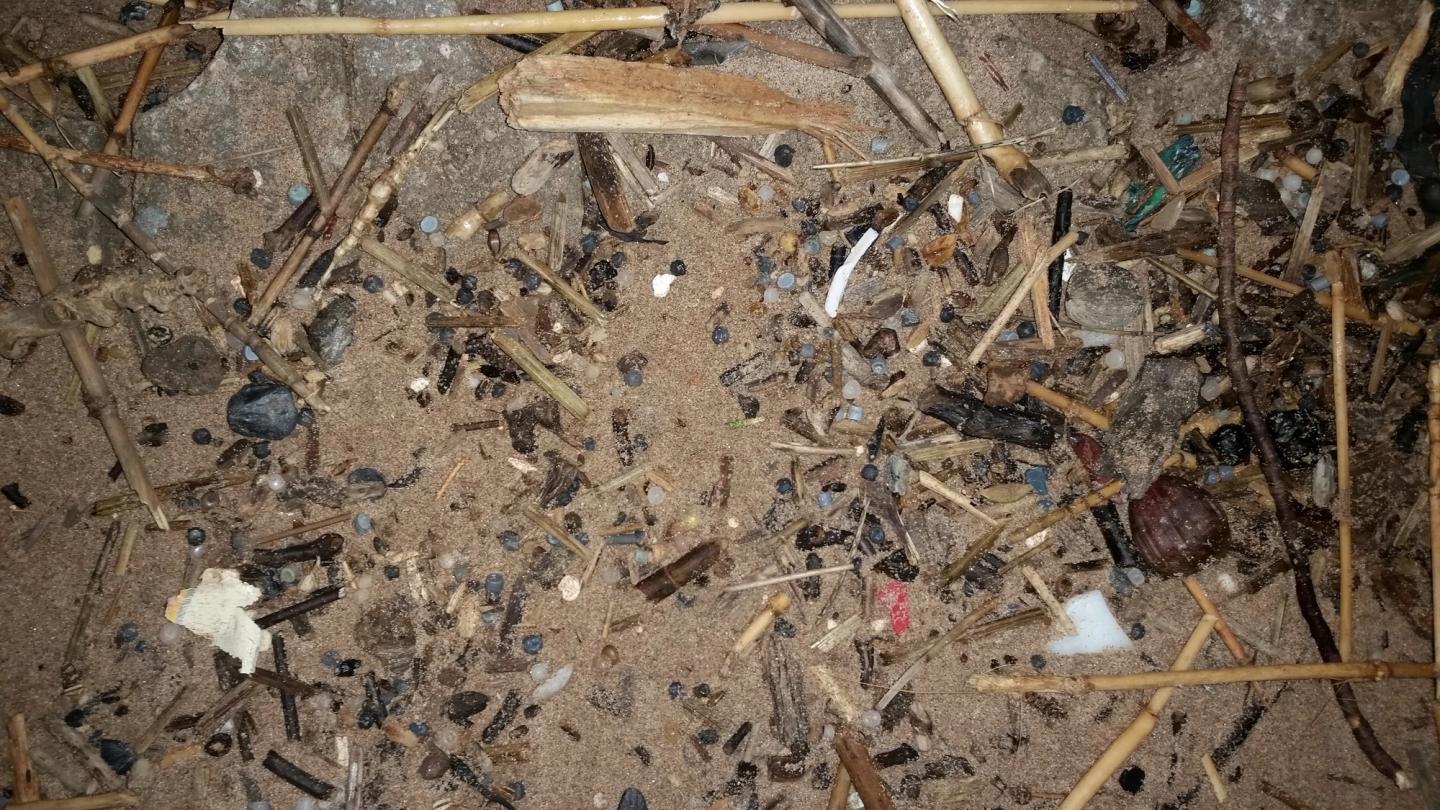
Illustrative / schematic only — plastic nurdles on a beach at Dawlish Warren, Devon (Wikimedia Commons / Partonez). NOT a photograph of Jude Anthony; NOT Negombo lagoon pens; NOT Pamunugama; not from The Guardian. Used to suggest nurdle pollution on shore, not the subject’s location.
What the pens lost
PAMUNUGAMA / NEGOMBO, WEST COAST, SRI LANKA · NOVEMBER 2026
Jude Anthony farms fish in the Negombo lagoon, which opens into the sea on Sri Lanka’s west coast. After the May 2021 X-Press Pearl disaster, he told The Guardian, nurdles and other pollution inundated his pens and killed stock he had spent months raising.
These details were reported by Vandy Widyalankara for The Guardian from Pamunugama in November 2026 (published 5 November; modified 6 November). This Field Note is a secondary editorial account of that reporting — not an original interview.
Pellets that still come ashore
In May 2021 the Singapore-flagged MV X-Press Pearl caught fire about ten miles off this coast, carrying hazardous cargo including nitric acid. Containers fell overboard; billions of plastic nurdles spilled before the vessel sank. Hundreds of dead marine animals washed ashore in the weeks that followed, including more than 100 turtles and dozens of dolphins. Five years later, Widyalankara found women still sifting Pamunugama sand for the tiny pellets.
Jude Sulanta, a fisher in Pamunugama, says the nurdles worsen in the monsoon: strong winds push them ashore; in calm seas they settle on the ocean floor. Anthony Nishantha describes nets that pull “something like cotton wool” since the disaster, and points to Thambugala — a known ground near where the vessel went down — where fish still gather but no longer appear to breed in the same numbers. Ranga Fernando says generational knowledge of where fish gather has become less reliable. Roger Peiris recalls coconut trees blackened and baby coconuts falling after the spill.
Everyone is talking about the fish that were destroyed on that day… But even now we cannot fish properly.
A ruling mostly unpaid
In July 2025 Sri Lanka’s supreme court ordered companies behind the X-Press Pearl to pay an initial $1bn. More than a year later, almost all of that sum remains unpaid; the Centre for Environmental Justice says only about $1m has been paid and continues to pursue enforcement. Interim compensation for a post-disaster temporary fishing ban, fishers say, missed many genuine claimants. Urban pollution and rising living costs already press the industry; fishers told Widyalankara the disaster compounded those pressures, with some selling boats or seeking work abroad.
No one cares about the little guy… We mind our own business, and we work and we live.
What remains open
Widyalankara’s November 2026 reporting settles the inundated pens, the pellets still coming ashore, and the largely unpaid court order. It does not settle whether Negombo’s lagoon farms regain clean water before the next monsoon, who pays what the July 2025 ruling named, or how long generational fishing grounds stay readable when the catch itself cannot be trusted.
Sources & Reading
Vandy Widyalankara, “‘No one cares about the little guy’: plastic nurdles still washing ashore in Sri Lanka five years after toxic spill,” The Guardian, 5 November 2026 (modified 6 November 2026). — Primary reporting: Jude Anthony (Negombo lagoon fish farmer); Jude Sulanta; Anthony Nishantha; Ranga Fernando; Roger Peiris; July 2025 $1bn supreme court ruling largely unpaid; CEJ ~$1m paid; interim ban compensation gaps; X-Press Pearl May 2021.
Related Forces
Related Places