Kept Welcome · Derjan, Mat
The Welcome She Was Taught to Keep
In Derjan, northern Albania, 91-year-old Hajrija Qerimi still describes the kulla hospitality her father taught her — never fewer than ten at the table, and nobody leaving without the best the house could offer — as villages thin and a new trail tries to reopen those doors.
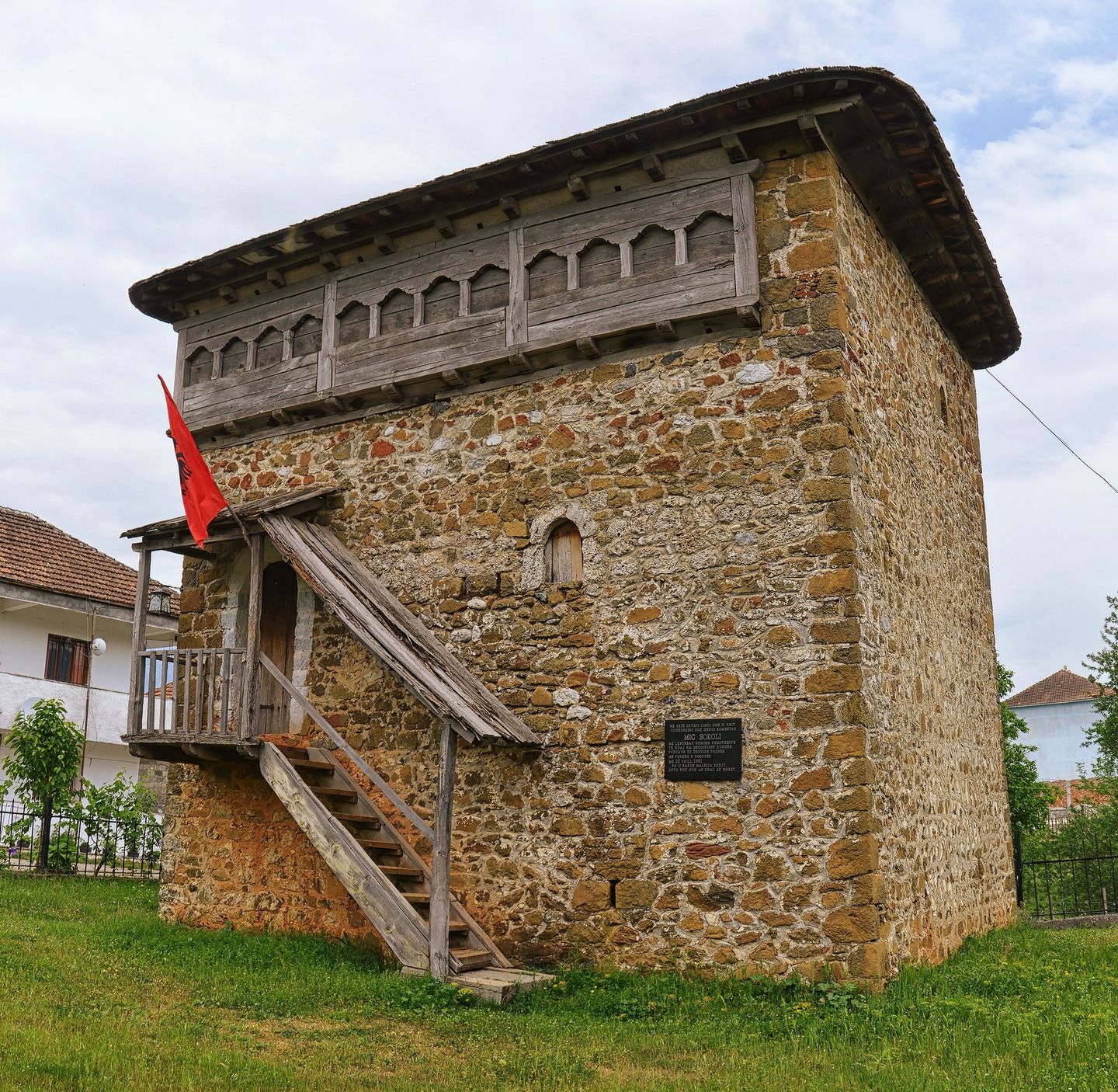
Illustrative / schematic only — a traditional stone kulla in northern Albania (Sokoli Kulla, Bujan; Wikimedia Commons / Pasztilla aka Attila Terbócs). NOT a photograph of Hajrija Qerimi, Luli Hupi, or their private houses; NOT their dinner table; not from The Guardian. Used to suggest kulla architecture along the Tower Trail country, not the Field Note subjects.
What she was taught at the door
DERJAN, ALBANIA · NOVEMBER 2026
At the end of a walking day in Derjan, in Albania’s Mat country, 91-year-old Hajrija Qerimi beamed as she spoke about growing up in a large kulla nearby. Her father had been a successful farmer, still remembered for his generosity. The family regularly hosted travellers. She said there were never fewer than ten people at the dinner table.
These details were reported by Nick St Oegger for The Guardian on 7 November 2026, from a Tower Trail through north-eastern Albania. This Field Note is a secondary editorial account of that reporting — not an original interview.
My father advised me early on that everyone who comes to the house is offered food and drink, and he taught me what and how to serve. The important thing was that nobody left without receiving the absolute best hospitality.
What the villages are losing
Qerimi grew up in a large kulla in Bruç. Along the trail’s first stage, in Lufaj, Nik Nikolli — director of Infokulla, a small museum in nearby Rubik — told St Oegger that many villages now have just one or two families left. “We are losing traditions because people aren’t staying here,” Nikolli said. Accepting money from a guest, he added, still cuts against long-established hospitality.
Kullas once sheltered families in conflict and travellers on trade routes. Under communism from 1944 to 1991, many were confiscated and later found ruined. After the 1990s and 2000s rural exodus, many still sit empty.
What one restored house still serves
On day four, in Dushaj, St Oegger stayed at Kulla Hupi, opened as a guesthouse in 2021. Owner Luli Hupi had spent years in a nearby mine, saving to restore the house room by room. He works with more than ten local families who supply the restaurant, and keeps guest numbers deliberately low.
People say I’m stupid for not having 50 tables at the restaurant. But I don’t want 50 tables, I want 10, and I want people to have to reserve a month in advance.
After corn bread, fig jam, pickles, goat’s cheese and gjizë, Hupi said that when you come here, there’s a family waiting, and you feel at home. He has no interest in mass tourism elsewhere in Albania.
What remains open
St Oegger’s 7 November 2026 reporting settles Qerimi’s remembered rule of the table, the emptying of trail villages, and Hupi’s slow restoration of one kulla. It does not settle how many empty towers reopen, whether paid hospitality can sit beside the unpaid kind, or how long villages with one or two families can hold the welcome they were taught to keep.
Sources & Reading
Nick St Oegger, “Albania’s restored stone houses throw open the doors to visitors,” The Guardian, 7 November 2026 (first published 7 November 2026, 02.00 EST). — Primary reporting: Hajrija Qerimi (91, interviewed in Derjan; grew up in large kulla in Bruç; father successful farmer known for generosity; never fewer than 10 at dinner; quote on offering food/drink and absolute best hospitality); Nik Nikolli (Infokulla director, Rubik; Lufaj walk; villages with one or two families; losing traditions; paid guests vs hospitality); Luli Hupi (Kulla Hupi, Dushaj, opened 2021; years in nearby mine saving to restore room by room; >10 local supplier families; keeps numbers low; 50 vs 10 tables quote; corn bread / fig jam / pickles / goat cheese / gjizë dinner); kulla history (conflict shelter, trade routes, communist confiscation 1944–1991, 1990s–2000s rural exodus); Tower Trail via Albanian Agritourism Association through Mirdita, Mat, Bulqiza, Dibra.
Related Forces
Related Places